


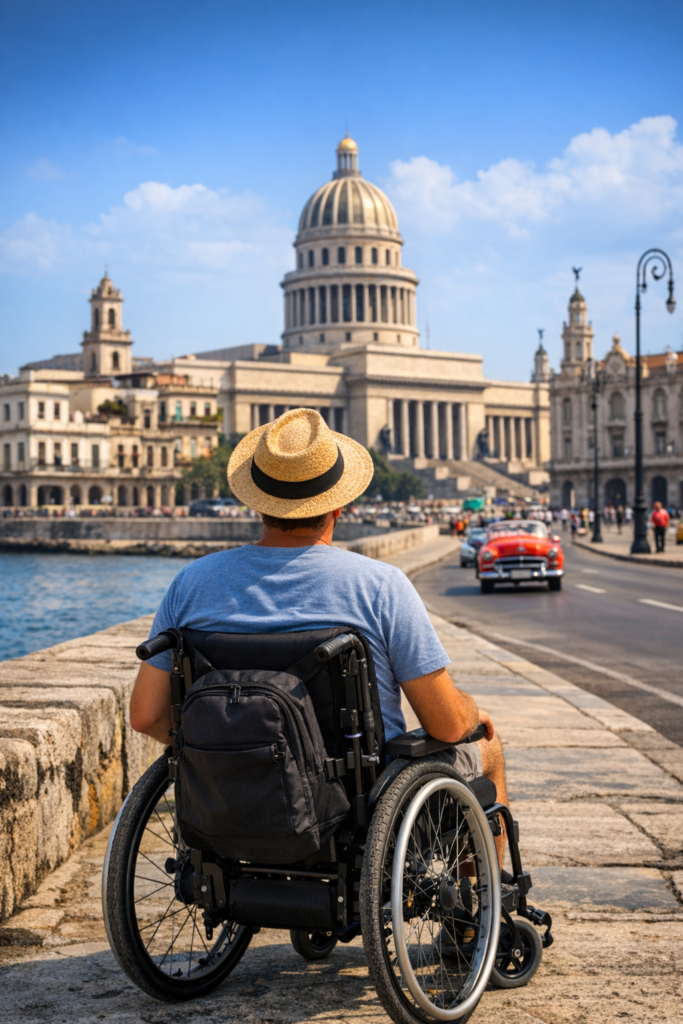
 Cuba
Cuba The origin of a project to promote accessible tourism in Cuba
It was in Barcelona, on a morning in May 2018, when I had my first meeting with Jordi Ballbe, president of Skedio Group. I still remember his words:
“We want Cuba to be a destination that everyone can travel to, including people with disabilities or reduced mobility.”
After more than thirty years working for accessible and inclusive tourism, I have rarely encountered someone with such a clear vision: to put people first and use tourism as a tool to build a fairer world.
The commitment to an inclusive destination
From that moment on, Enjoy Travel Group, together with the Ministry of Tourism of Cuba and ECOTUR, assumed the objective of turning Cuba into a tourist destination open to all.
This commitment was consolidated with the celebration of the IV Ibero-American Summit on Accessible Tourism in December 2021 in Havana, where the Declaration of Havana “For Accessible Tourism in Ibero-America” was signed, currently supported by twelve countries.
The process was also supported by the Cuban tourism sector, Cuban Medical Services, universities, public administrations and associations of people with disabilities.
Training, awareness and joint work
The road to accessible tourism has been marked by years of work:
- training sessions for tourism professionals
- awareness-raising campaigns
- evaluation of hotel establishments and extra-hotel offerings
- meetings with the country’s tourism management officials
Juan Carlos García Granda, Minister of Tourism, was one of the driving forces behind this process, as was the collaboration with Cuban associations of people with disabilities such as ACLIFIM, ANSOC and ANCI.
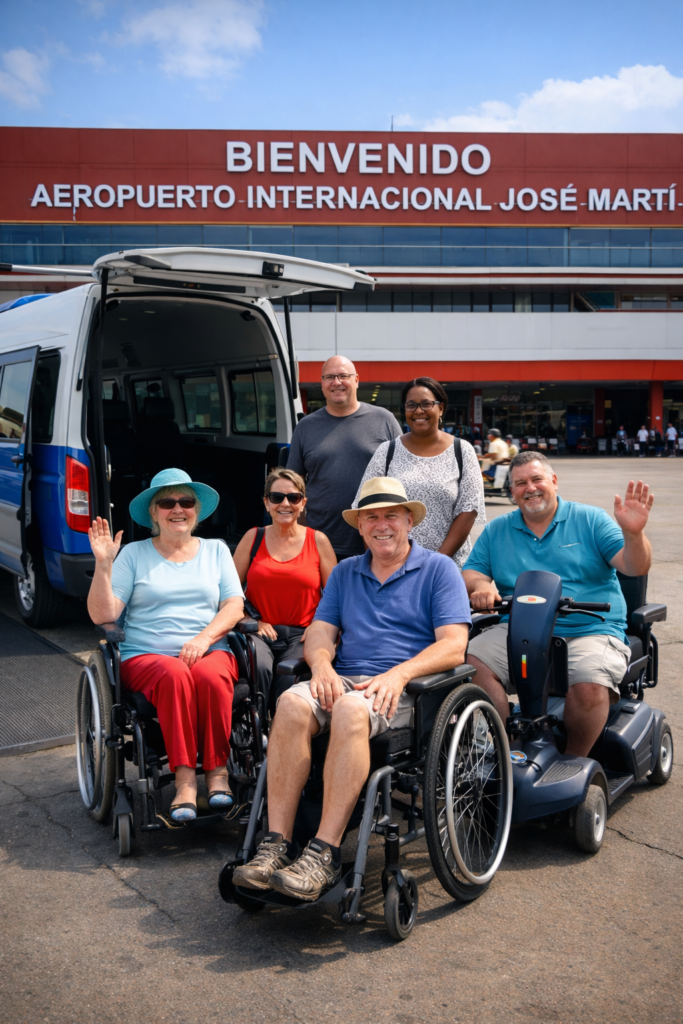
The arrival of the first group of tourists with disabilities
In January 2023, the first organized group of tourists with physical disabilities arrived at Havana’s José Martí Airport as part of the Accessible Tourism – Tourism for All segment.
Although some travelers arrived with uncertainty about the accessibility of the destination, they soon found that many of their concerns were unfounded:
- adapted transportation from the airport
- specialized assistance
- hotels with rooms adapted to international standards
Accessible programs to discover Cuba
Enjoy Travel Group currently offers five accessible travel programs that allow you to discover different regions of the country:
- Havana
- Varadero
- Viñales
- Las Terrazas
- Cienfuegos and Trinidad
These itineraries allow you to enjoy the landscapes, culture and Cuban hospitality with conditions adapted for people with reduced mobility.
Unique Experiences: Viñales, Havana and Trinidad
Many travelers especially remember their visit to the Viñales Valley, where a master cigar roller transforms tobacco leaves into cigars while sharing stories and traditions.
Also, emblematic places such as:
- the four historical squares of Havana
- the historic center of Trinidad
Although some cobblestone streets can be challenging, Enjoy Travel Group offers four-wheeled scooters with suspension to make the ride easier.
Accessible landmarks
Among the most accessible places is the Hotel Nacional de Cuba, recognized by the Ibero-American Network of Accessible Tourism.
Among its most emblematic spaces are:
- the Hall of Fame
- its historic gardens
- the Cabaret Parisien
Access to the cabaret is by means of an oblique translation platform, allowing you to enjoy the show in total comfort.
Affordable shopping in Havana
For those who wish to take home a souvenir, Almacenes San José offers a wide variety of Cuban handicrafts.
Although the second floor is not accessible, the first floor allows you to comfortably tour this historic market located in a 19th century building.
Accessible beaches in Varadero
Cuba’s beaches are famous for their white sand and turquoise waters, and Varadero stands out as one of the most attractive destinations in the Caribbean.
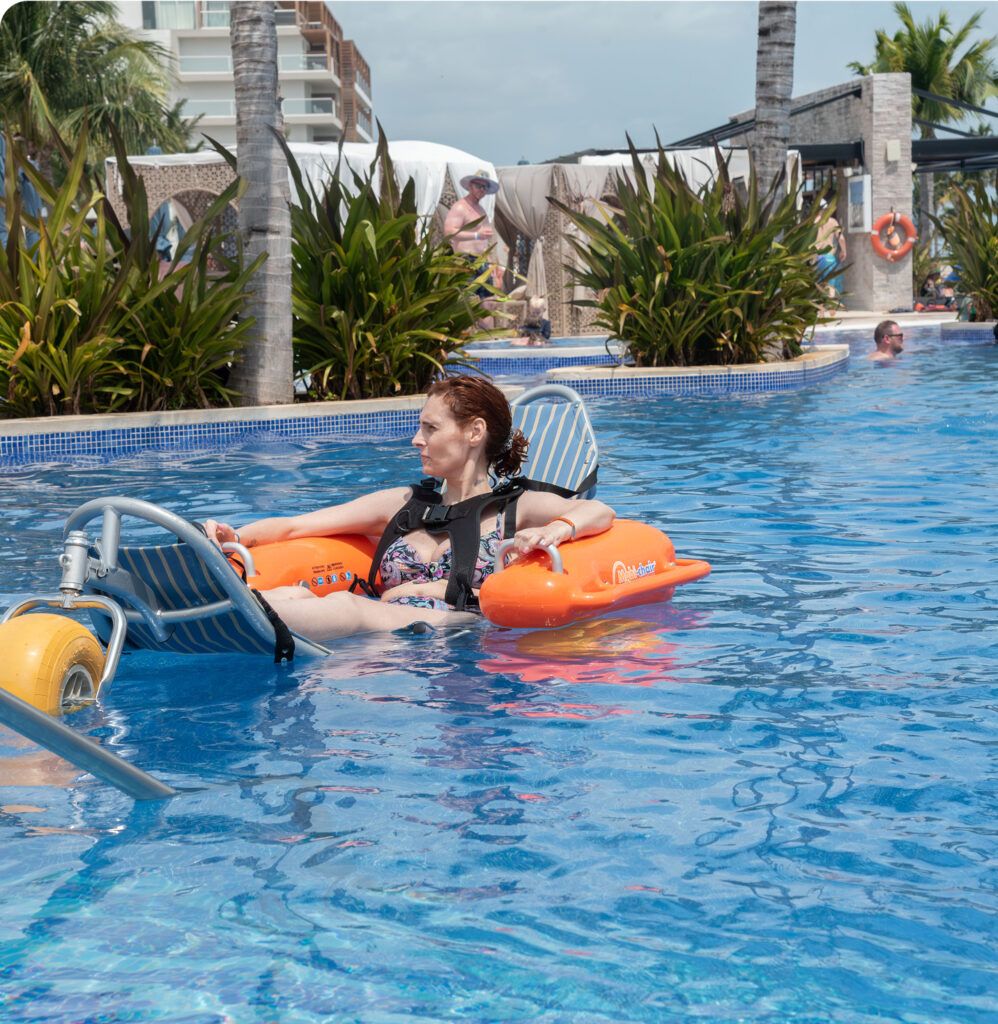
In addition to hotels with good accessibility conditions, several nautical points have amphibious chairs, allowing people with reduced mobility to enjoy the sea.
A destination open to all
After eight years of work, the results speak for themselves.
Seeing the happiness of those who today can discover Cuba shows that accessible tourism is not just a trend, but a way to make the world a more inclusive place.
Because what really makes a destination unique is its ability to be open to everyone, without exception.




Leave a comment